

The Pioneer Generation (The Companions)
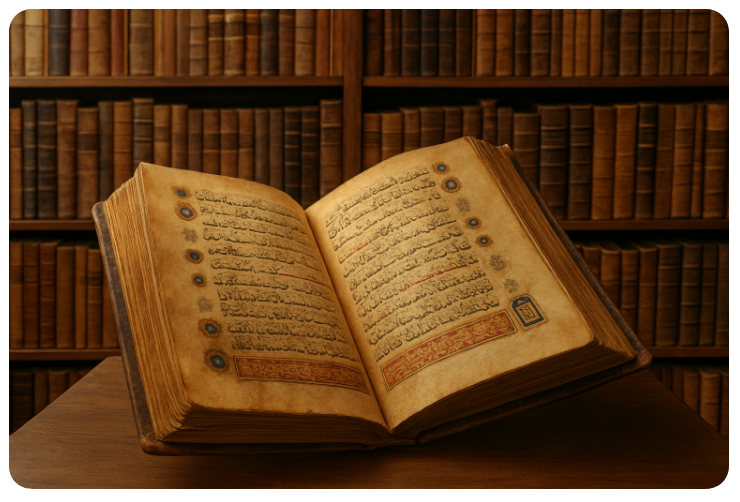
- Abu Hurayra He is considered the most prolific narrator of Hadith, having memorized and narrated over 5,000 traditions. Many prominent later scholars studied under him.
- Abdullah ibn Abbas A cousin of the Prophet, he was highly regarded for his deep knowledge and critical interpretation of the Qur'an and Hadith. He held classes that were considered foundational to Islamic scholarship.
- Abdullah ibn Amr ibn al-As He was one of the few companions who actively wrote down everything he heard from the Prophet Muhammad. His personal collection was called Al-Sahifah al-Sadiqah ("The Book of the Truth"), which was later incorporated into the larger Musnad of Imam Ahmad ibn Hanbal.
- Ali ibn Abi Talib The fourth Caliph, he also had a written collection (sahifa) from the Prophet Muhammad, primarily concerning laws of zakat (taxation).
|
Order |
Imam (Compiler) |
Full Name |
Lived (CE/AH) |
Book Title |
Madhhab (School of Thought) |
Geographic Location (Birth/Death)
|
|
|
1 |
Imam al-Bukhari |
Abu Abdullah Muhammad ibn Isma'il al-Bukhari |
810–870 CE (194–256 AH) |
Sahih al-Bukhari |
Early Sunni; closest to Shafi'i in usul |
Born in Bukhara, Uzbekistan; died in Khartank near Samarkand
|
|
|
Notable Contribution Compiled the most authentic book after the Qur’an, applying strict criteria of connected chains and narrator character precision. |
|||||||
|
2 |
Imam Muslim |
Abu al-Husayn Muslim ibn al-Hajjaj al-Qushayri al-Nishapuri |
818–875 CE (202–261 AH) |
Sahih Muslim |
Sunni; influenced by Shafi'i methodology |
Born and died in Nishapur, Iran (Khurasan)
|
|
|
Notable Contribution Refined hadith classification and arrangement, known for grouping narrations by topic and chain variations. |
|||||||
|
3 |
Imam Ibn Majah |
Abu Abdullah Muhammad ibn Yazid al-Rabi'i al-Qazwini |
824–887 CE (209–273 AH) |
Sunan Ibn Majah |
Sunni; likely influenced by Shafi'i school |
Born and died in Qazwin, Iran
|
|
|
Notable Contribution His collection includes narrations not found in the other five books, making his Sunan unique and completing the Kutub al-Sittah. |
|||||||
|
4 |
Imam Abu Dawud |
Abu Dawud Sulayman ibn al-Ash'ath al-Sijistani |
817–888 CE (202–275 AH) |
Sunan Abi Dawud |
Sunni; closely aligned with Hanbali scholars |
Born in Sistan (Iran/Afghanistan); died in Basra, Iraq
|
|
| Notable Contribution
Focused on hadiths directly related to Islamic rulings (fiqh), heavily used by jurists and judges. |
|||||||
|
5 |
Imam al-Tirmidhi |
Abu Isa Muhammad ibn Isa al-Tirmidhi |
824–892 CE (209–279 AH) |
Jami’ al-Tirmidhi (also known as Sunan al-Tirmidhi) |
Sunni; influenced by Shafi'i fiqh and later respected by Hanafi jurists |
Born and died in Tirmidh, Uzbekistan
|
|
| Notable Contribution
Known for including hadith grading (sahih, hasan, da‘if) and mentioning juristic differences—very valuable for fiqh and hadith students. |
|||||||
|
6 |
Imam al-Nasa’i |
Ahmad ibn Shu'ayb ibn Ali al-Khurasani al-Nasa'i |
829–915 CE (214–303 AH) |
Sunan al-Nasa’i (and al-Sunan al-Kubra) |
Sunni; associated with Shafi'i school |
Born in Nasa (Turkmenistan); died in Makkah, Hijaz
|
|
| Notable Contribution
His Sunan is noted for accuracy and narrator scrutiny; Sunan al-Sughra (al-Mujtaba) is among the most reliable after Bukhari and Muslim. |
|||||||


